

PalMod - Paleo Modelling: A national paleo climate modelling initiative
The PalMod funding initiative simulates the climate of the last 130,000 years up to the present day using high-resolution Earth system models. The BMFTR supports these activities for researching the climate and its change.
The Earth's climate has changed significantly since the beginning of industrialization, as evidenced by clear global surface warming, declining ice cover, and rising sea levels (see IPCC 2023). The term “Anthropocene” was coined to describe our era and the strong influence humans have had on the Earth system, including man-made climate change.
However, large natural climate variations have also been observed in the Earth's geological past. The best-known variations are the sometimes relatively rapid sequences of cold and warm periods. To understand these, researchers need to model them using comprehensive Earth system models.
- The aim of PalMod is to simulate a complete “glacial-interglacial cycle” using complex Earth system models. This is an important basis for sound digital climate models. Only in this way can valid predictions be made about the development of our climate system within this century and the coming millennium.
- The PalMod funding program of the German Federal Ministry of Research, Technology, and Space (BMFTR) is investigating the climate dynamics, natural climate variability, and underlying control processes during the last glacial cycle (the past 130,000 years) and their effects on the climate of the future. To this end, the relative contributions of the processes that determined the Earth's climate during the last glacial cycle are being identified and quantified, and the climate of the last 130,000 years up to the present is being simulated using Earth system models. To enable these very long simulations over a period of 130,000 years, computer scientists are optimizing existing Earth system models, thereby improving their runtime.
The results from these model studies will be used to improve the reliability of climate projections and the informative value of future climate simulations. More accurate climate forecasts will enable the economy and society to adapt more effectively to the effects of climate change.
The PalMod funding measure is designed to run over several funding cycles (three phases with a total duration of around ten years).
September 2023: Start of the third funding phase of PalMod
The plan is to develop an adaptive scheme for simulating the seabed and a river flow scheme as important steps towards the planned simulation over 130,000 years.
The third phase will be supported by the Federal Ministry of Research, Technology, and Space (BMFTR) with around 10 million euros until 2026.
Results from Phase I (2016 to 2019) and Phase II (2019 to 2022)
In the second phase of the PalMod funding program from 2019 to 2023, the BMFTR (then BMBF) supported around 37 individual projects with € 14 million. In the first phase from 2016 to 2019, 54 individual projects were funded with a total volume of € 19 million.
- The following significant results were achieved in the first two phases:
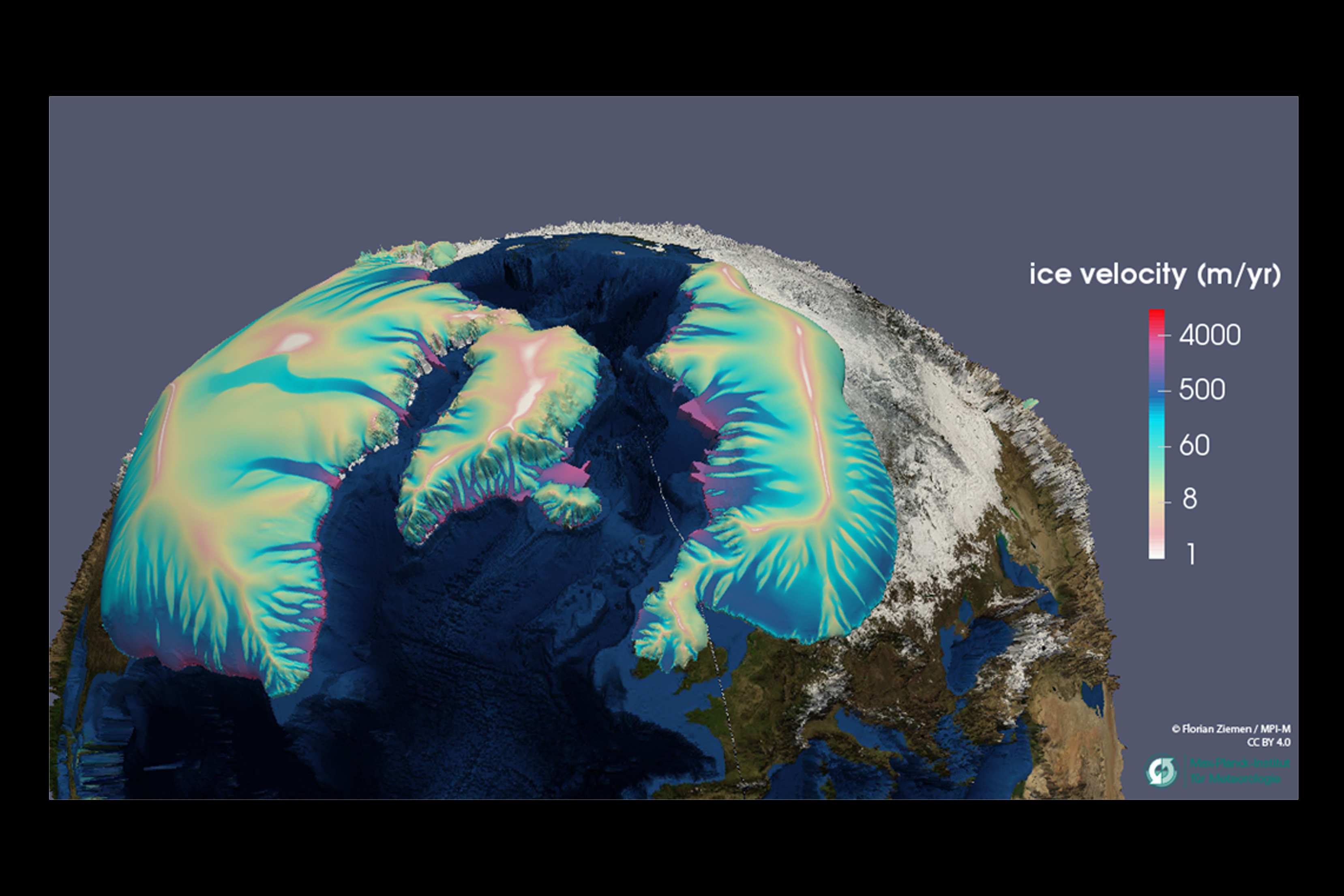
- For the first time, ice sheet and solid earth models were integrated into coupled atmosphere-land-ocean-sea-ice circulation models.
- Great progress was made in identifying and simulating key processes for the various components of the climate system that determine atmospheric greenhouse gas concentrations of carbon dioxide (CO2) and methane (CH4).
- In addition, a synthesis of proxy records from marine, terrestrial, and ice core records from the last 40,000 years was carried out.
News about the measure
Last updated on