



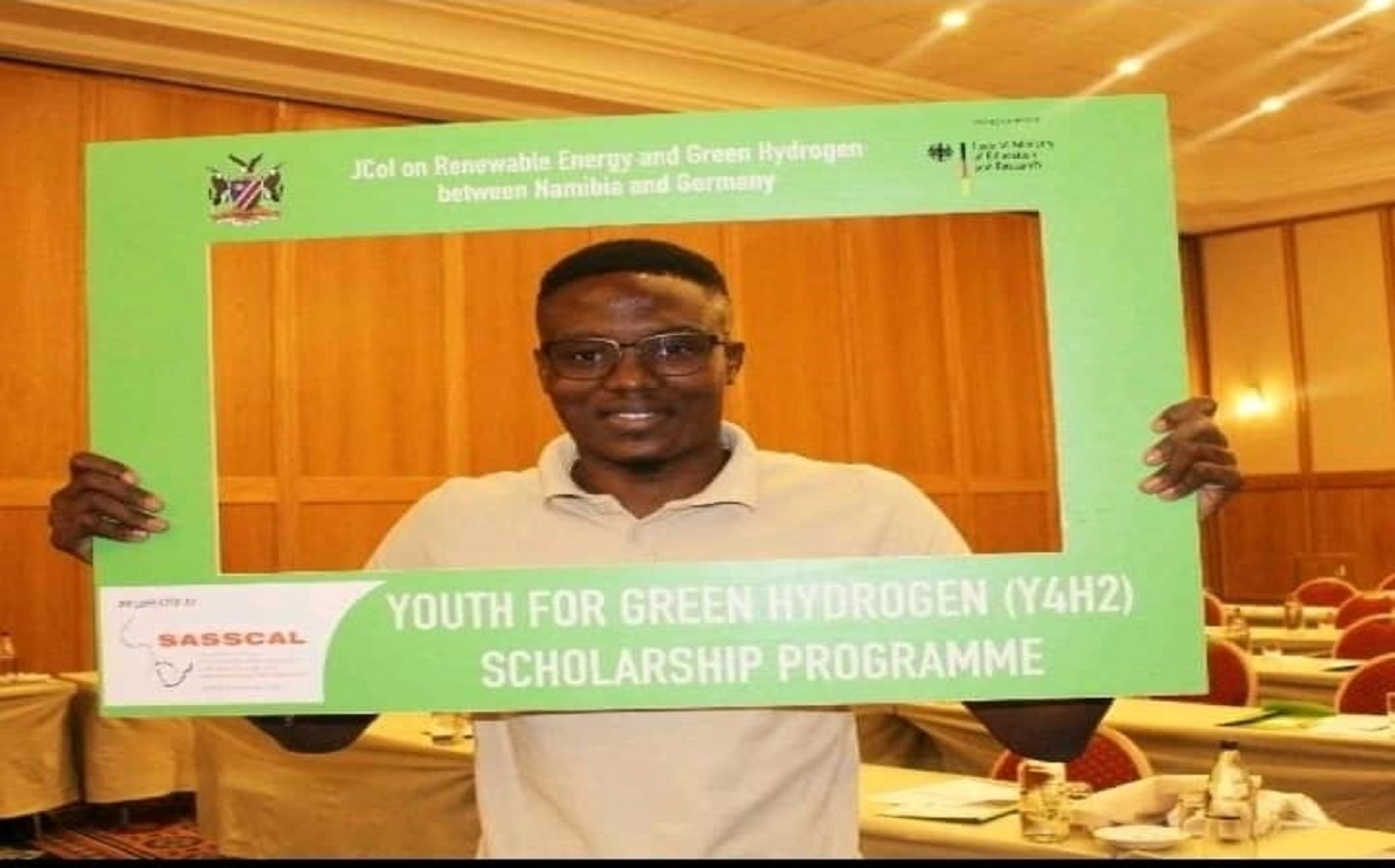
Electronics student Daniel Ndayamohamba from Namibia
Daniel Ndayamohamba is a Namibian youth and in his second year of the three-year Advanced Diploma (NQF Level 6) in Electrical and Electronic Engineering TVET at Triumphant College in Windhoek. He is supported within the the non.academic part of the scholarship in the Youth for Green Hydrogen Scholarship Programme: technical and Vocational Education and Training (TVET) that will provide valuable skilled workforce on the technical level. He has shared his experiences with us.

1. Please describe in five sentences what your training is about.
My training focuses on power systems and electrical installations, combining theory with hands-on experience. This prepares me to support Namibia's green hydrogen sector, where skilled techni-cians are essential for infrastructure development. I thank the German Government for funding this program and recognizing the importance of TVET education in building a sustainable future.
2. In your opinion, what is the most important use of green hydrogen?
Green hydrogen serves as a critical decarbonization solution across multiple sectors, primarily replacing fossil fuels in industrial applications. Its key uses include steel manufacturing through hydrogen-based direct reduction of iron, clean ammonia production for fertilizers, and synthetic fuel creation for aviation and maritime transport. In the refining and chemical industries, it enables low-carbon processing of hydrocarbons and feedstocks. For energy systems, it provides long-duration storage for renewable power and fuel for gas turbines in electricity generation. Additional applications include high-temperature heat for cement and glass production, propulsion in aero-space applications, and off-grid power solutions through fuel cells.
3. What has been your most memorable experience during the program so far?
The most impactful aspect of my TVET training has been the intensive hands-on workshops at Triumphant College, where we develop practical competencies through direct application. Under expert supervision, I have gained realworld skills by wiring industrial control panels, testing electrical circuits to safety standards, troubleshooting power distribution faults, and calibrating precision measurement instruments.
These practical sessions transform theoretical knowledge into professional capability, preparing us to contribute immediately to Namibia's energy sector as work-ready technicians. What makes this training exceptional is its focus on authentic workplace scenarios. By physically assembling systems and verifying operations with my own hands, I have developed the precise skills needed to install and maintain green hydrogen infrastructure. This experience has shown me why TVET graduates are essential for implementing sustainable energy solutions - we are trained not just to understand systems, but also to build and repair them competently.
4. What advice would you give to a future TVET participant?
TVET education is the backbone of any construction sector; it teaches the hands-on skills needed to build and maintain infrastructure. My advice to future students is to remain focused, embrace practical learning, and align their skills with high-demand sectors such as renewable energy, green hydrogen, solar, and wind technologies. These fields hold immense potential for sustainable devel-opment and career growth.
Furthermore, I strongly recommend that vocational training centers develop and offer TVET courses tailored to current industry needs. These programs should include internationally recog-nized curricula and be delivered by qualified specialists. This approach will ensure that graduates are equipped not only for the local job market but are also competitive on a global scale.
5. What are your professional plans/ideas for the future?
After graduating, I plan to work on green hydrogen projects, ensuring efficient and reliable energy use. I also intend to mentor future TVET students, helping to build a skilled workforce for Namibia's energy sector. Through advocacy, I will promote the importance of vocational training in achieving national energy goals.

6. Bonusfrage: Gibt es noch etwas, das Sie uns mitteilen möchten (z. B. eine nette Anekdote, wie Sie schlechte Erfahrungen überwunden haben, usw.)
Meine Reise zu den erneuerbaren Energien: Als finanzielle Engpässe drohten, meine Bildungsambitionen zunichte zu machen, eröffnete sich mir durch die Deutsche Gesellschaft für Internationale Zusammenarbeit (GIZ), Deutschlands internationale Entwicklungsagentur, eine einmalige Chance. Über ihre Green People's Energy Initiative wurde ich 2022 Mitglied der Renewable Energy Industry Association of Namibia (REIAoN) - einer Organisation, die sich für nachhaltige Energielösungen, die Gestaltung der Politik für erneuerbare Energien und die Förderung von Karrieremöglichkeiten im namibischen Sektor für saubere Energie einsetzt.
Als engagiertes REIAoN-Mitglied habe ich fleißig an Workshops teilgenommen und jeden Newslet-ter nach Möglichkeiten durchforstet. Meine Hartnäckigkeit wurde belohnt, als ich das Namibian Youth for Green Hydrogen Scholarship Programme entdeckte. Trotz meiner finanziellen Einschränkungen setzte ich all meine Kräfte für die Bewerbung ein und nutzte dabei die Erkenntnisse, die ich durch REIAoN gewonnen hatte. Der lebensverändernde Moment kam 2024, als ich das Stipendium erhielt, um ein Diplom in Elektrotechnik und Elektronik am Triumphant College zu machen - eine Bestätigung dafür, dass Entschlossenheit meine Zukunft neu definieren kann.
Last updated on