

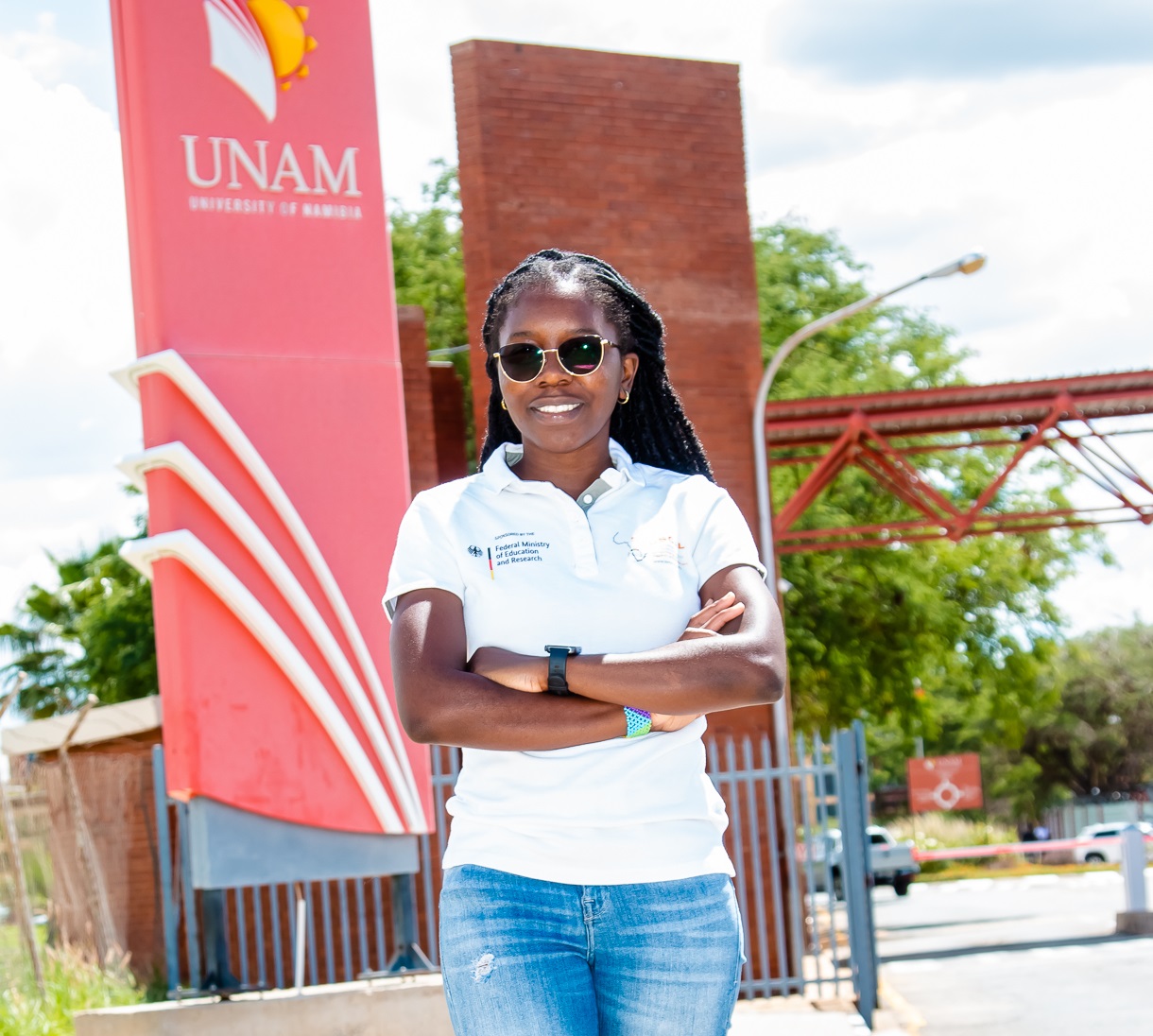
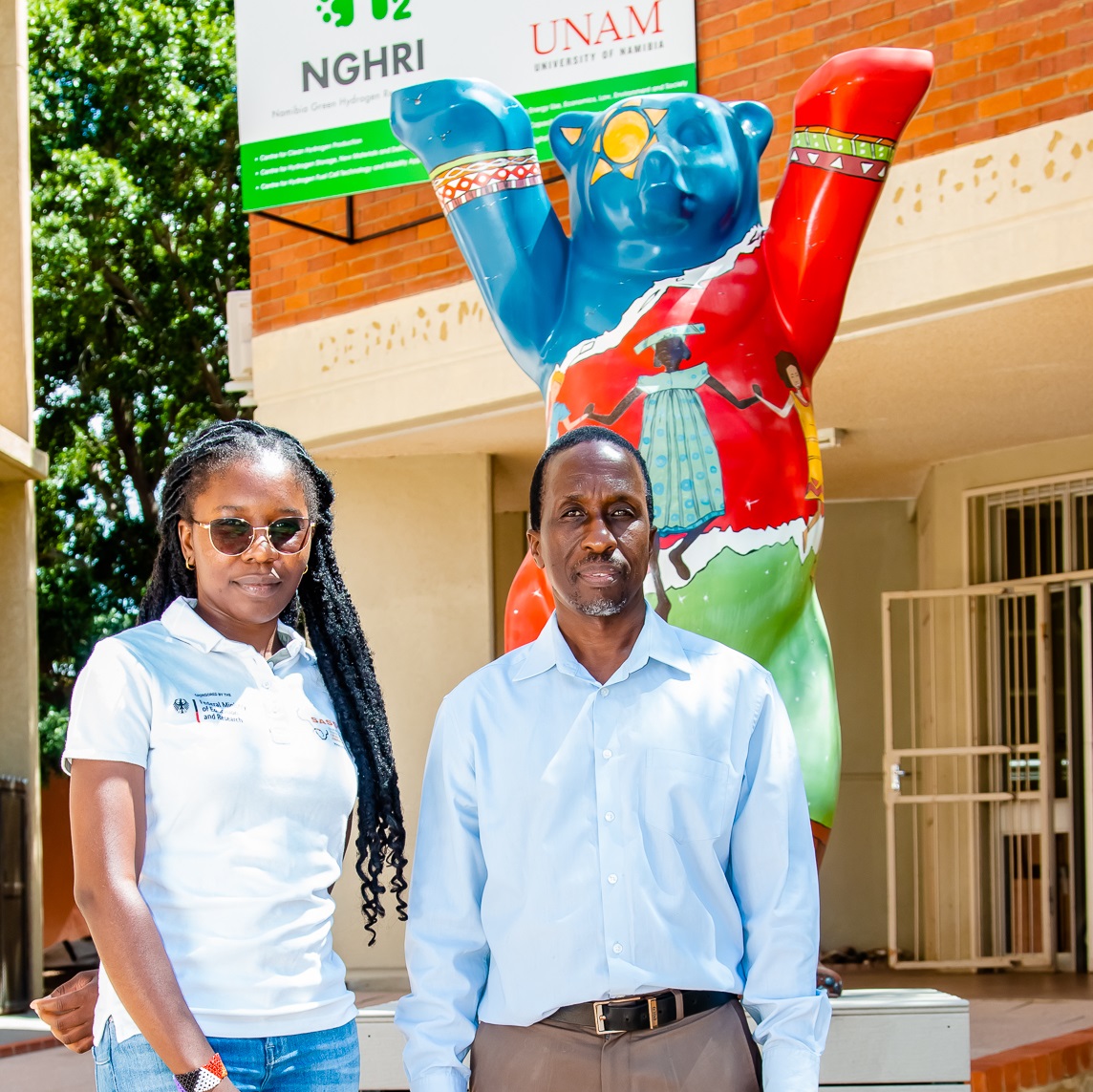
Hydrogen safety expert Mona Uunona from Namibia
Mona Uunona from Oshakati, Namibia is a successful graduate from the Youth for Green Hy-drogen (Y4H2) Scholarship program. She is 30 years old and completed her Master's degree at the Physikalisch-Technische Bundesanstalt in Braunschweig, Germany and the University of Namibia in Windhuk. The Programm is part of the Joint Communique of Intent (JCOI) between Germany and Namibia.
1. Please describe in 5 sentences what your Master's thesis is/will be about.
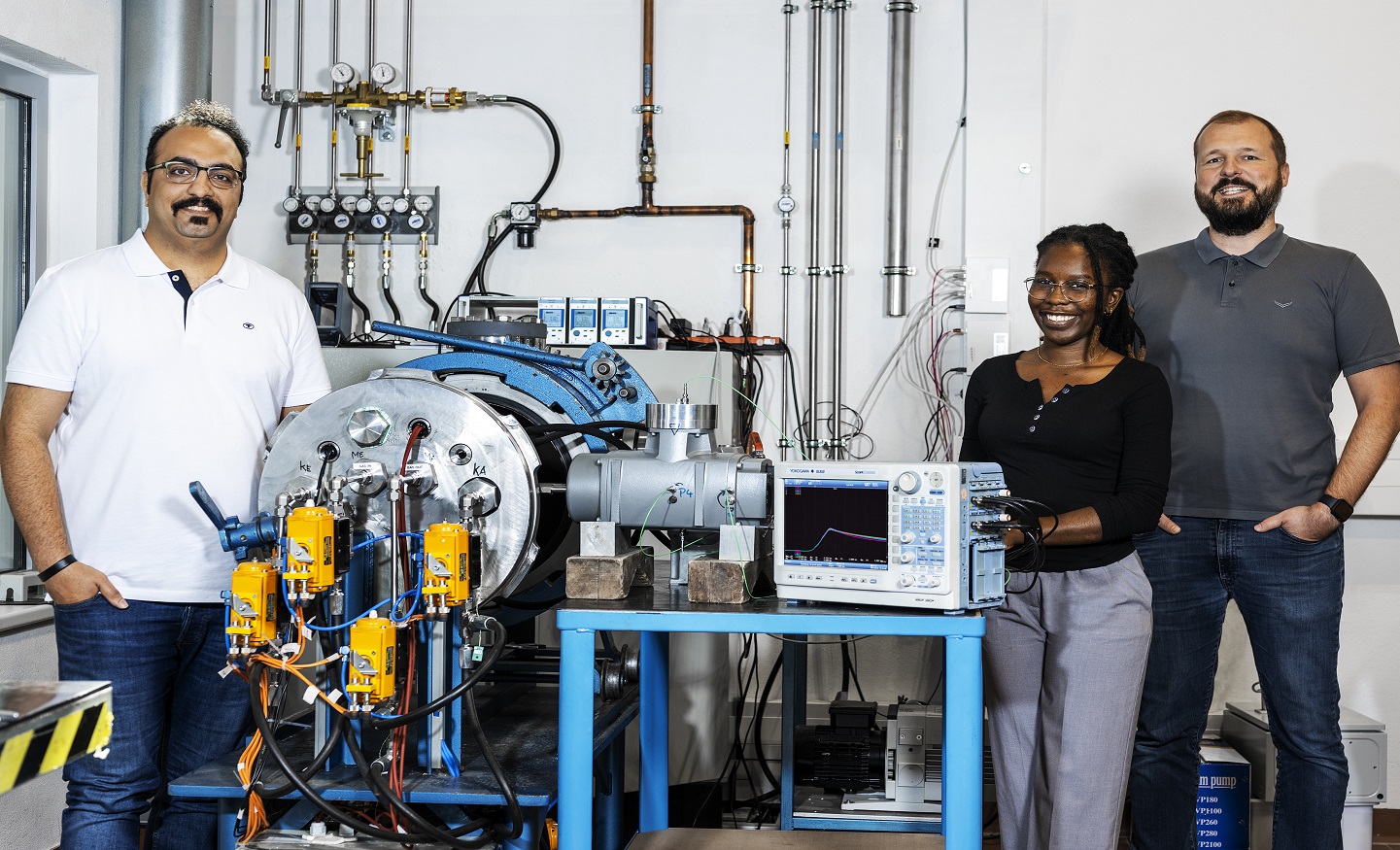
My Master's thesis was about explosion protection in energy systems, focusing on how hydrogen-air mixtures behave during explosions. The title of my thesis was "Influence of Enclosure Geometries and Internal Installations on the Explosion Pressure of Hydrogen-Air Mixtures." I followed the IEC 60079-1 standard, which deals with the design and testing of flameproof enclosures. I studied how the shape of the enclosures and the parts inside them affect the pressure during an explosion. This is important for making hydrogen systems safer. The goal of my work was to help improve safety in future hydrogen technologies, espe-cially for use in industry and energy storage.
2. In your opinion, what is the most important use of green hydrogen?
Green hydrogen is not just a future energy option — it can change how we power the world in a cleaner way. I believe one of its most important uses is in reducing emissions from the transport sector, especially heavy-duty vehicles where batteries are not as effective. It can help make the automotive industry cleaner and provide a safer and more efficient fuel.
But green hydrogen is also important for industries like steel and chemical production, which are usually hard to make climate-friendly. So, green hydrogen is not just a fuel — it is a key part of reaching a net-zero future.
3. What has been your most memorable experience during your Master's Program?
My most memorable experience was visiting Salzgitter Flachstahl GmbH, a steel manufacturing company in Salzgitter, Germany. I got to witness the entire steel production process—from raw materials to the final product—and it completely blew my mind. It was during this visit that I truly understood the scale and complexity of industrial operations, and the critical role green hydrogen can play in decarbonizing them. That moment really shifted something in me, it made me proud to be part of this journey and sparked a deep hope for Namibia to build up its own industrial capacity one day. Seeing how advanced and integrated Germany's industry is has inspired me to dream bigger for my country.
4. What advice would you give to a future student in the field of green hydrogen?
Stay curious and don't be afraid to get your hands dirty—this field is as practical as it is theoretical. Try to understand the real-world challenges, from safety issues to infrastructure gaps, and see how your work can help solve them. Also, be open to learning from other countries while staying rooted in the specific needs of your own country. Lastly, never underestimate your potential to drive change. Namibia and the entire Africa needs bold thinkers and doers in this space.
5. What are your professional plans/ideas for the future?
My goal is to become an expert in hydrogen safety and explosion protection, and to contribute to-ward making hydrogen technologies both scalable and safe in Africa. I would love to be involved in the rollout of hydrogen infrastructure in Namibia and across the continent. In the long term, I hope to lead or be part of initiatives that support local manufacturing, education, and job creation around green hydrogen. It's not just about building systems—it's about building people and sustainable communities.
6. Bonus question: I there anything else you want to share (like a nice anecdote, how you overcame bad experiences, etc.)
There was a point during my studies when I really questioned if I was in the right field, I was over-whelmed and felt a bit out of place. Coming from an electrical engineering background with a ca-reer path that had already taken shape in a different direction - working in construction, operations, and maintenance - I wasn't sure if shifting into the world of hydrogen and energy systems was the right move. But then I reminded myself why I started, to be part of something bigger than myself, something meaningful for my country and the world. That mindset shift helped me push through, and now I'm incredibly proud of the decision to pivot and grow in this space.
Last updated on