


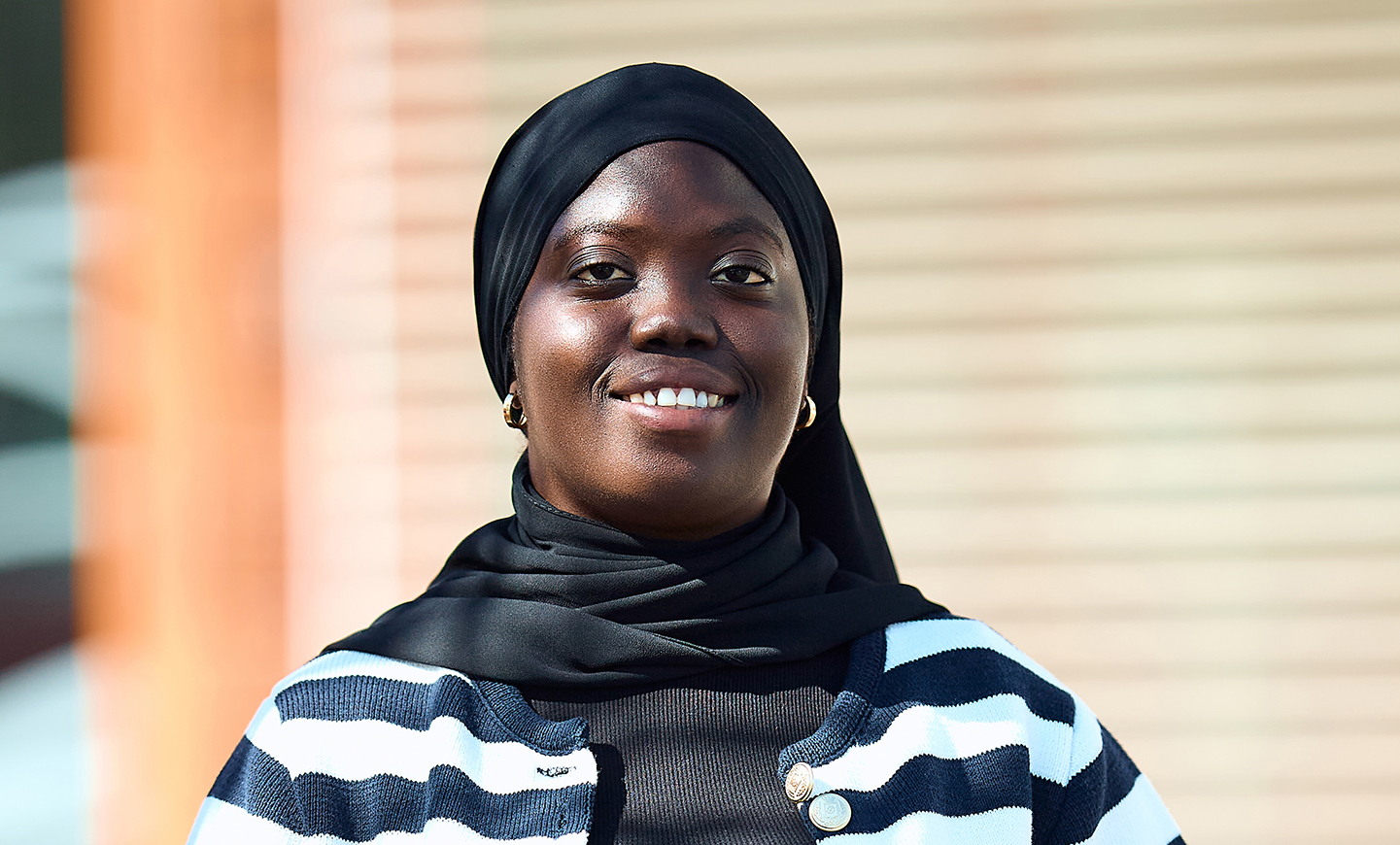
Solar cell expert Penda Fall from the Ivory Coast
Penda Fall a 25 year old Doctoral Researcher at the University of Luxembourg shares her experiences during the International Master’s Programme in Energy and Green Hydrogen (IMP-EGH) in the interview

You graduated in October 2023 - what and for whom are you currently working?
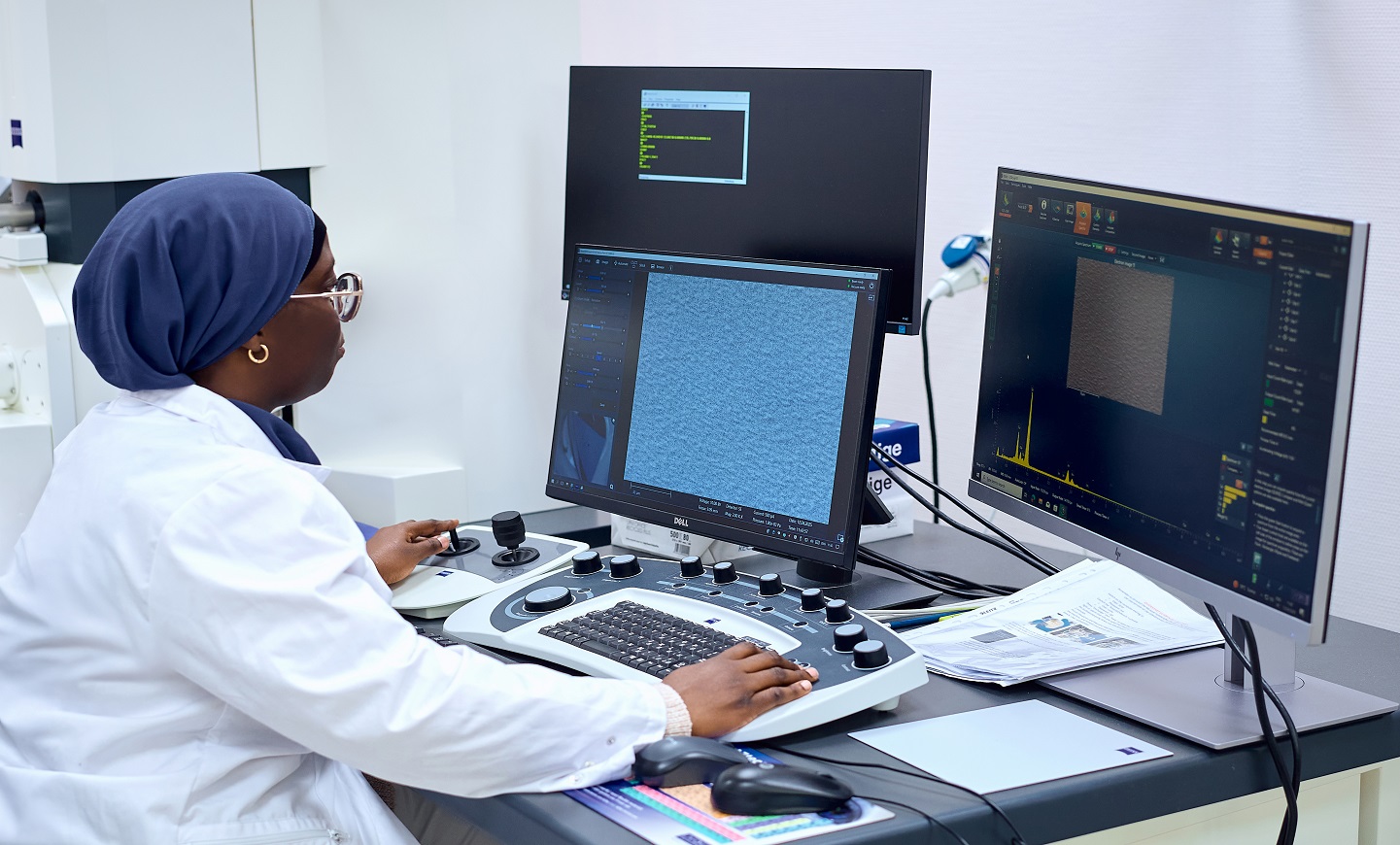
I am currently a Doctoral Researcher at the University of Luxembourg, working in the Laboratory for Photovoltaics under the supervision of Prof. Dr. Susanne Siebentritt. My PhD research is all about understanding how light and electricity behave at tiny cracks (called grain boundaries) in special solar films made with chalcopyrite. These films are grown using high-tech methods called MOVPE and MBE. Besides science, I also volunteer with Croix-Rouge (Red Cross) Luxembourgeoise, where I lead fun weekly activities for kids. We do everything from painting and board games to cool science experiments and nature-themed projects. So, I mix high-level research with hands-on fun for the next generation!
Please describe in 5 sentences what your Master's thesis was about.
For my Master's thesis at Forschungszentrum Jülich, I worked on special solar cells made with silicon carbide. I tested if shining light on them (with some heat) could fix tiny issues caused during their production. Turns out, heating them to 175 °C while shining light for 6 minutes gave the best results. With this method, the solar cells reached a great efficiency of 23.4%, which is pretty awesome. This showed that using just light and heat together can really boost solar cell performance!
In your opinion, what is the most important use of green hydrogen?
Green hydrogen can be used in many ways. But I think its most important use is helping to reduce CO₂ emissions in areas where it's really hard to do so – especially in transportation. Transport is still one of the biggest sources of CO₂ worldwide. Electric vehicles are a good option for personal use and short trips. But they don't work as well in areas like airplanes and ships. That's because batteries are heavy, don't last long enough, and take too long to charge. This is where green hydrogen is very useful. It has a lot of energy and can be refueled quickly, which makes it a good solution for cutting emissions in heavy and long-distance transport.
What was your most memorable experience during the "International Master Program in Energy and Green Hydrogen"?
What advice would you give to a future student of the Master's program?
Bonus question: Is there anything else you want to share (like a nice anecdote, how you overcame bad experiences, etc)
Looking back on these 28 months of training across Ghana, Niger, Burkina Faso, and Germany, what I carry with me most is the richness of the intercultural exchange and a sense of personal growth and maturity that I never imagined at the start.
Last updated on