

Centres of Excellence for Climate Change and Adaptive Land Management in Africa
How can Africa cope with the consequences of climate change? Droughts and extreme weather events are putting greater stress on soils and forests. Two climate competence centres in western and southern Africa are researching and testing solutions for adapting land use to climate change together with German research institutions and are training young scientists. The Federal Ministry of Research, Technology and Space (BMFTR) supports them in this.
In the Paris Agreement, the states set themselves the goal of increasing adaptive capacity to climate change worldwide. Developing countries in particular are to be supported in climate adaptation. Africa is particularly affected by climate change, although it is the continent with the lowest emissions of pollutants. Many countries on the continent therefore need strong support in developing and implementing strategies and measures to adapt to climate change. Germany is taking responsibility for this, and in doing so is also contributing to the United Nations Sustainable Development Goals (SDGs).
The land use sector plays a central role in adapting to climate change, because nature's ecosystem services, such as the provision of oxygen, food, nutrients, etc., secure the existential livelihoods of the population. Therefore, questions are becoming increasingly urgent as to how, for example, the countries of Africa can take consistent action against the current climate changes on the ground and what measures can be taken to improve the situation of the countries. In order to provide scientifically sound answers to these questions, the Federal Ministry of Research, Technology and Space (BMFTR), together with ten partner countries in western Africa and five in southern Africa, has established two regional centres of excellence for climate change and sustainable land management in Africa. Since Sierra Leone and Guinea-Bissau joined in 2025, the Centre of Excellence in Western Africa has consisted of fourteen member countries. Since 2012, the BMFTR has invested around 340 million euros in building up of the two centres WASCAL (West African Science Service Centre on Climate Change and Adapted Land Use) and SASSCAL (Southern African Science Service Centre for Climate Change and Adaptive Land Management).
In their regions, SASSCAL and WASCAL stand for excellent academic training, innovative and practice-oriented research in international cooperation and the establishment and operation of research infrastructure. The overarching goal of this BMFTR initiative is to support African countries affected by climate change in establishing scientific structures so that they can make their own valid decisions on the ground, for example for sustainable land use, water supply and food security. In this way, the BMFTR is making a significant contribution to building an African knowledge society and strengthening the potential for adaptation to climate change in Africa.
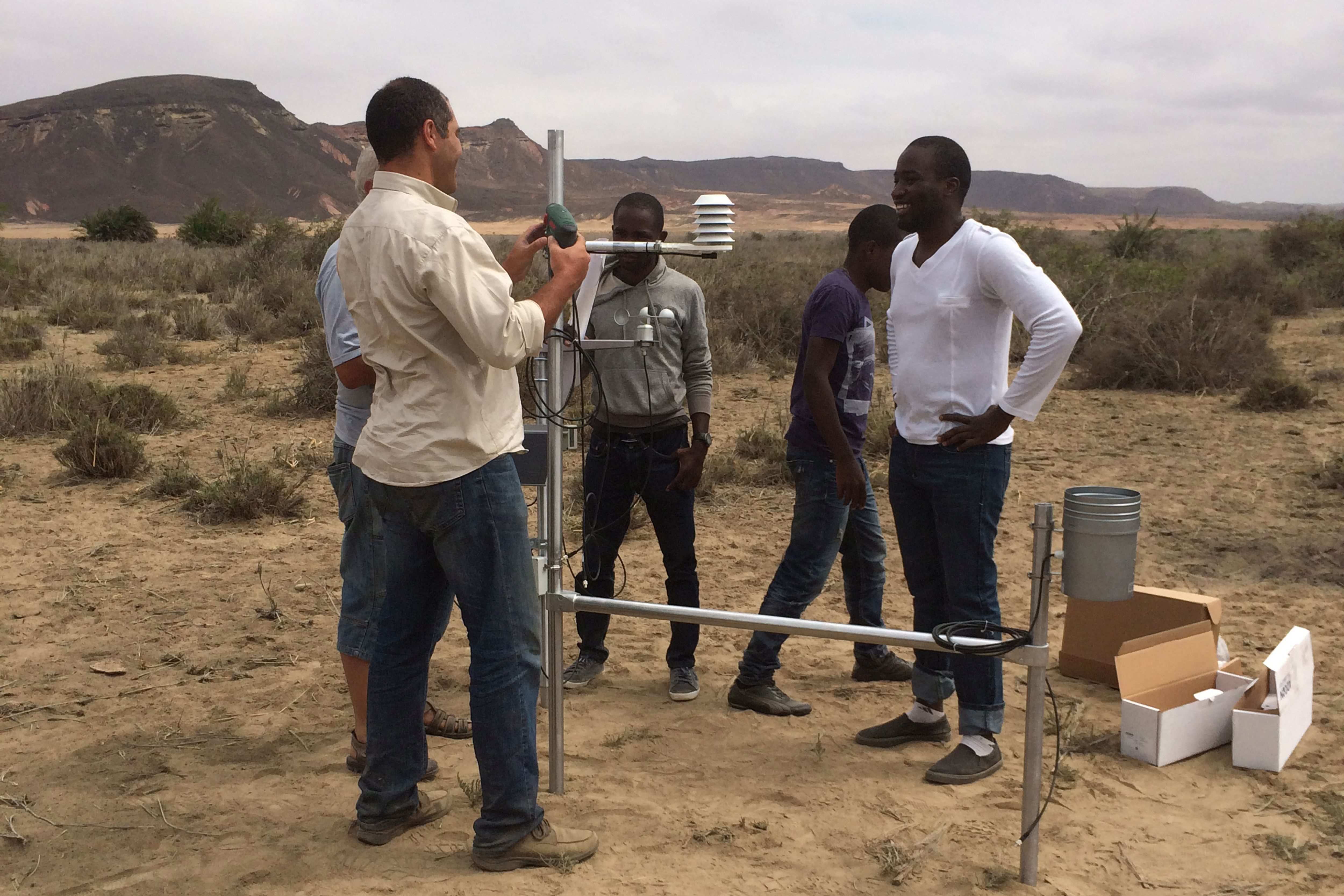
The BMFTR is determined to continue to provide financial and political support for the efforts of African partner countries to combat the effects of climate change. That is why the BMFTR is providing a further 24.3 million euros per centre for the second research phase from 2021 to 2026. With this, the BMFTR aims to establish regional and internationally recognised science-based Climate and Environmental Services Centres (CESCs) in the respective regions. Furthermore, the BMFTR is funding a project to develop climate services with just under 1.2 million euros and is investing almost 3 million euros in the repair and modernisation of weather stations in southern Africa.
In addition to research, both centres run a graduate school programme in close cooperation with renowned universities and research institutions from the region and from Germany. At WASCAL alone, a total of 24 million euros is being invested in this for the approximately 180 fourth and fifth year students currently in training. The sixth year started in January 2025 with almost 13 million euros in funding. For SASSCAL, the BMFTR is providing three million euros to establish a first graduate school on the topic of "Integrated Water Resources Management" in partnership with the Namibia University of Science and Technology (NUST) in Windhoek, Namibia, and the International Centre for Water Resources and Global Change (ICWRGC) in Koblenz, Germany.
SASSCAL and WASCAL also play an important role in the BMFTR's international cooperation on green hydrogen technologies and for the establishment of strategic partnerships as door openers for the development of a global green hydrogen economy. This offers enormous opportunities, because positive development dynamics can be unleashed by building a sustainable energy system with new value chains. To this end, science, politics, companies and investors are involved from the outset. Specialised personnel will be trained locally and sustainable international knowledge networks will be established.
With the WASCAL initiative (West African Science Service Centre for Climate Change and Adaptive Land Management), a regional centre of excellence for climate change and sustainable land use was established in western Africa. To this end, Germany works together with the states of Benin, Burkina Faso, Cape Verde, Côte d'Ivoire, Gambia, Ghana, Guinea, Mali, Niger, Nigeria, Senegal and Togo. The Climate Competence Centre was founded in 2012 through a cooperation agreement between the ten member countries and established as an international organisation under the responsibility of the African partner countries. Following the recent accession of Cape Verde and Guinea, WASCAL now consists of twelve African member countries. The centre has its headquarters in Accra, Ghana, while the WASCAL Research and Data Centre is located in Ouagadougou, Burkina Faso. The BMFTR participates in the development of the institution primarily through programme-oriented funding for research and capacity development as well as through investments in research infrastructure and the development of climate services.
Building regional education and research capacities
One focus of the international institution WASCAL is the internationally renowned regional graduate school programme with a thematic focus on climate change and renewable energies. Since 2012, a total of almost 500 Master's students and doctoral candidates have already successfully completed their postgraduate studies and doctorates. Currently, the sixth intake of students for two Master's and eleven doctoral programmes in the field of climate change and the second degree programme in the field of renewable energies are already in training. The programmes are geared towards the long term in order to sustainably strengthen the necessary skills on site and create prospects for young academics in their home countries.
Between 2021 and 2024, six projects were carried out in the second phase of the research programme (WRAP 2.0). This served to expand WASCAL's research fields by strengthening and consolidating the already existing partnerships of the West African and German scientific communities.
Click here for the WASCAL research networks
With the SASSCAL initiative (Southern African Science Service Centre for Climate Change and Adaptive Land Management), a regional centre of excellence for climate change and sustainable land management was established in southern Africa. Participating countries are Namibia, Botswana, Zambia and Angola, as well as Germany. South Africa currently has the status of an affiliate member, as it has not signed the founding treaties. The Climate Competence Centre was established in 2012 through a cooperation agreement between the member countries. The centre has its administrative headquarters in Windhoek, Namibia. The BMFTR supports SASSCAL in the development of the institution, primarily through programme-oriented funding for research and capacity development as well as through investments in research infrastructure.
Free access to current weather and climate data
The SASSCAL WeatherNet and ObservationNet are at the heart of the Environmental Services Centre and are operated by the Open Access Data Centre (OADC). It consists of 164 automated weather stations, 65 biodiversity observatories and the associated IT infrastructure for data exchange and free access to all weather and climate data from the region already collected according to international standards. This opens up new possibilities for climate research and allows, among other things, the development of better management strategies for sustainable land and water management, risk analyses and forecasts for droughts and floods as well as assessments of other climate change impacts. All data already collected by the African-German research consortia is available free of charge in the Data Centre of the Climate Service Centre for further use by interested institutions, international researchers or also for policy advice on site.
Graduate school to strengthen regional education and research capacities
Another pillar of SASSCAL is the strengthening of regional, human and institutional capacities in the region through the establishment of the Graduate Studies Programme (SGSP), the Alumni Network and non-academic training. These activities are already showing first successes: in April 2022, the regional graduate school programme on Integrated Water Resource Management (IWRM) was launched together with and established at the Namibia University of Science and Technology (NUST) and the German partner "International Centre for Water Resources and Global Change" (ICWRGC). Furthermore, the first 63 Master's and 29 TVET (Technical Vocational Education and Training) scholarship holders began their studies or training in the field of renewable energies in April 2023.
In addition to the second research phase, the BMBF has funded a new research area "Hydrogen" to create a potential atlas for the region (H2Atlas-Africa). The topic of "Renewable Energies" has been declared a priority topic for the region by the SASSCAL Governing Board.
The two centres of excellence for climate change and adapted land use in southern and western Africa (SASSCAL and WASCAL) focus on academic training, research cooperation and the development of research infrastructures. In the graduate school programme, African and German universities, research institutions and science organisations cooperate closely with each other. They enable young qualified academics to be well trained locally and to be involved in research work. The programme offers them the opportunity to gain and pass on their knowledge in their home country. It opens up new career prospects for them in their native regions and supports the recruitment of professionals from Africa for key positions in science, business and administration for Africa's sustainable development.
Since 2012, almost 500 students have successfully completed the WASCAL graduate school programmes on climate change and renewable energies. The first 13 students of the SASSCAL graduate school in climate change will graduate in 2025. In addition, the first 63 Master's and 29 TVET (Technical Vocational Education and Training) scholarship holders started their studies or training in the field of renewable energies in April 2023.
WASCAL
The WASCAL graduate school programme supports and promotes academic training at West African universities in cooperation with German partner institutions. The focus lies on the education of doctoral and master's students.
The graduate school programme consists of eleven doctoral programmes and two master's programmes in the field of climate and four master's programmes in the field of energy and hydrogen technologies.
Host university
Each of the doctoral and master's programmes is autonomous and based at a lead university, which is selected in a consultation process among the applicant countries. The climate competence centre WASCAL supports academic teaching, awards scholarships to the selected students for the duration of the programme and promotes their involvement in research activities. All programmes are open to candidates from all WASCAL countries. Depending on the number of places available, the host universities are to admit additional self-financed students in the future. The programmes combine the scientific and educational strengths of the faculties in the West African region and thus support high-quality research and education. An important part of WASCAL is to strengthen the cross-national collaboration in building capacity and knowledge to address climate change and renewable energies.
Interdisciplinary approach
Added value is achieved by networking experts and university institutes from the ten identified key areas, enabling an interdisciplinary approach to work. This includes teaching, student supervision and cross-border exchange of experiences.
German partner universities
The German partner universities collaborate with the PhD and Master's programmes by developing curricula, awarding visiting professorships and co-supervising students. In addition, West African students and lecturers are given the opportunity to conduct research at German universities or visit research institutions at the partner universities.
Language requirements
All programmes are offered in English, but applicants will not be rejected if their level of English is limited. Before the start of their studies, students are required to take English and French language courses.
Resources and facilities
WASCAL students and researchers from the various faculties have access to all the facilities and resources of the WASCAL Climate Knowledge Centre. The overall WASCAL programme is coordinated by the Capacity Building Department at the WASCAL headquarters in Accra.
SASSCAL
The SASSCAL Graduate School Programme (SGSP) is a joint regional initiative to develop and implement innovative, excellent and collaborative educational opportunities through doctoral programmes in SASSCAL member countries Angola, Botswana, Namibia, South Africa and Zambia.
The first SASSCAL graduate school programme started in April 2022 with a focus on integrated water resources management (IWRM) in Namibia and is run by the Namibia University of Science and Technology (NUST) in collaboration with the International Centre for Water Resources and Global Change (ICWRGC) in Koblenz as the German partner institution. In addition, the first 63 Master's and 29 TVET (Technical Vocational Education and Training) scholarship holders began their studies or training in the field of renewable energies in April 2023.
The SASSCAL Graduate School is affiliated to the research programmes under the coordination of the selected host university in the respective SASSCAL member country to ensure internationally comparable quality. This offers the advantage that academic processes can be managed directly at the university, students are admitted locally and individual training sections can be organised in cooperation with the German partner university. The German partner universities work with the PhD programmes by co-developing curricula, awarding visiting professorships, co-supervising students and allowing them to conduct research at a partner university in Germany for up to six months during their second year of study.
Excellence in the region
The graduate school programme contributes to SASSCAL in the development and establishment of regional centres of excellence based on current research priorities. In this way, SASSCAL, together with the BMFTR, aims to establish regional and internationally recognised science-based Climate and Environmental Services Centres (CESC) in the specific regions.
As part of the implementation of the renewed Franco-German friendship treaty (Treaty of Aachen, 2019), the CS4RRA (Climate Services for Risk Reduction in Africa) initiative was launched in 2023. With CS4RRA, France, Germany together with other European and West African partners, such as WASCAL, want to work together more closely on the topic of "climate resilience in Africa" and thus also contribute to the new innovation agenda between the African Union and the European Union.
Improved climate knowledge and services at regional and local level are needed to strengthen climate resilience in Africa. These will help to reduce the risks of extreme weather, such as drought, storms and floods, by strengthening adaptation to climate change. The aim of the CS4RRA initiative is to identify and promote common priorities in climate resilience in the areas of research, innovation and capacity development in West Africa. On this basis, long-term multinational research cooperation with other European and African partners will be established and joint funding announcements prepared.
The content design of the CS4RRA initiative was defined in 2023 and 2024 through four expert dialogues in the format of webinars, which were held by WASCAL in Togo, Côte d'Ivoire, Senegal and Ghana with a total of over 600 participants from research, politics and civil society (analogue and virtual). Each of the four events was dedicated to a specific topic:
- Improvement of early warning systems in the case of extreme weather
- Water Excess Management
- Assessing climate impacts and resilience under different scenarios
- Climate-adapted agriculture and sustainable landscape planning
In addition to these topic-specific priorities, these webinars also discussed overarching needs, such as improving the data basis of climate change impacts and a stronger integration of socio-economic data and local knowledge. A white paper summarising the results of all the webinars is available here.
The next step was a synthesis conference held on site in Banjul, Gambia, and online from 5 to 6 November 2024, at which the results of the four webinars were discussed. In addition to further elaborating on priority topics, the conference aimed to attract potential European and African cooperation partners and to prepare a joint funding announcement with them for 2025.
Last updated on