

WASA projects reach first milestones and gain political visibility
The BMFTR funded program to increase water security in Africa (WASA) is well on track. To ensure a lasting impact beyond the program's end in 2028, scientific findings need to be translated into investable solutions. The progress was confirmed by the ministries involved in WASA from South Africa, Namibia, Botswana, Zambia, and Germany, and the representative of the African Ministers' Council on Water. The research program was presented at a symposium in Lusaka, Zambia, at the end of October.
Eighteen months in, seven WASA projects and one coordinating initiative have reached the one-third mark. All projects have advanced or implemented key milestones, such as starting field studies, conducting laboratory experiments, operating pilot plants, and involving local stakeholders and decision-makers.
Of particular note are the planned deliveries in 2026 of pilot plants for treating mine water from South African mining operations as part of the MAMDIWAS project, as well as for water reuse in the Namibian city of Oshakati in the WaReNam project. Local engagement reinforces the impact of these projects. For instance, municipal investments planned for the NEW-Water project will support the development of nature-based solutions for purifying and using rainwater and gray water in low-income urban areas.
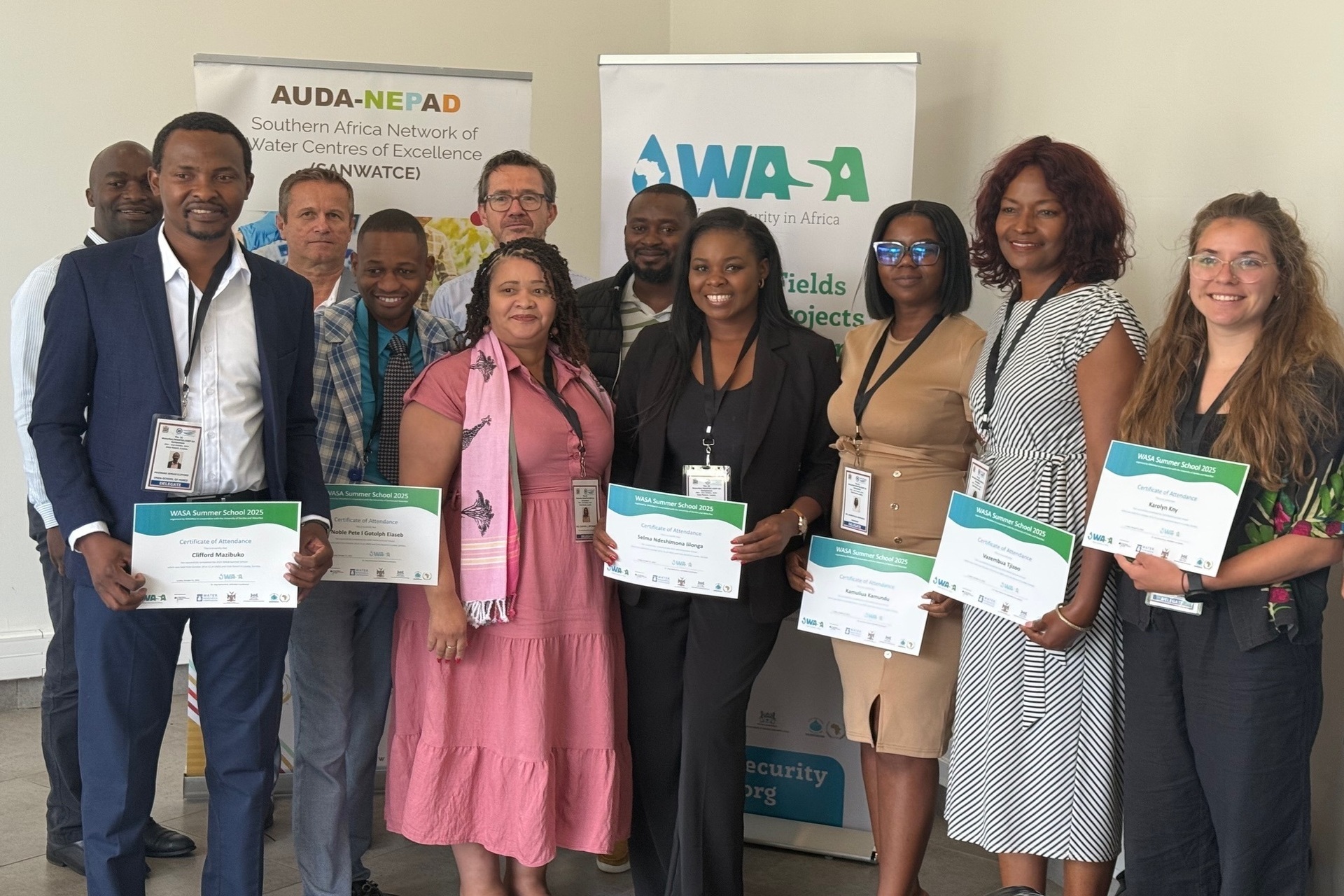
Another focus is on capacity building: in addition to regular technical webinars, the WASA Summer School contributes to networking among young scientists. The first edition of the Summer School brought together 30 young researchers, who were taught by experienced experts from the projects and presented their results at the WaterNet Symposium in Lusaka.
Synergies between the objectives of the WASA program and national initiatives are also evident at the political level: several countries are developing new water strategies to increase supply security through measures such as water reuse and expanding institutional and human resources. In October 2025, the African Ministers' Council on Water (AMCOW) adopted the Africa Water Vision 2063, a continent-wide strategy aligned with the WASA objectives.
To ensure long-term viability of the results, existing strategies for practical implementation and follow-up financing should be further developed. For instance, suitable projects could be identified and clear handover strategies defined for them. This would prevent data loss and ensure continuity of pilot operations after projects end. Involving suitable partners, such as the African Development Bank and the private sector, is also crucial to translating scientific results into investable solutions.
More information about the WASA program of the German Federal Ministry of Research, Technology, and Space (BMFTR) and its projects can be found here and in the WASA webinar series. Dates for 2026 will be published on the WASA website.