
PolyUrbanWaters
The PolyUrbanWaters project aims to provide innovative and transferable tools that support water-sensitive, sustainable, and climate-resilient urban transformation in Southeast Asia and localization of the 2030 Agenda.
Taking into account urban development dynamics, climate change and limited financial and institutional capacities, the PolyUrbanWaters joint project is developing an approach to establish water as a cross-sectoral issue in urban development.
The project aims to enhance water-related public services and strengthen the climate change resilience of medium and small cities in Southeast Asia.
PolyUrbanWaters (PUW) is a transdisciplinary project involving partners from the fields of science, civil society institutions, city administrations, government institutions, and professional practice. PUW addresses the thematic priorities of water-sensitive urban planning and infrastructure, sustainable municipal services, climate adaptation, and integrated land and water resource management.
The project's pilot cities – Sam Neua (Laos), Sleman (Indonesia) and Kratie (Cambodia) – are representative of Southeast Asian cities with populations of up to three million. The tools developed during the research and development (RD) phase (2021–2025) can also be applied in other urban contexts in the region and beyond.
During the research and development (R&D) phase, analytical tools in the form of baseline studies were successfully developed and tested. These tools capture the natural, economic, socio-structural and cultural dynamics of urban change, assessing the associated water management challenges in the context of climate change and respective governance structures. They provide a solid methodological framework for understanding the complexity of urban transformations and for deriving strategic options for water-sensitive transformations that align with local capacities.
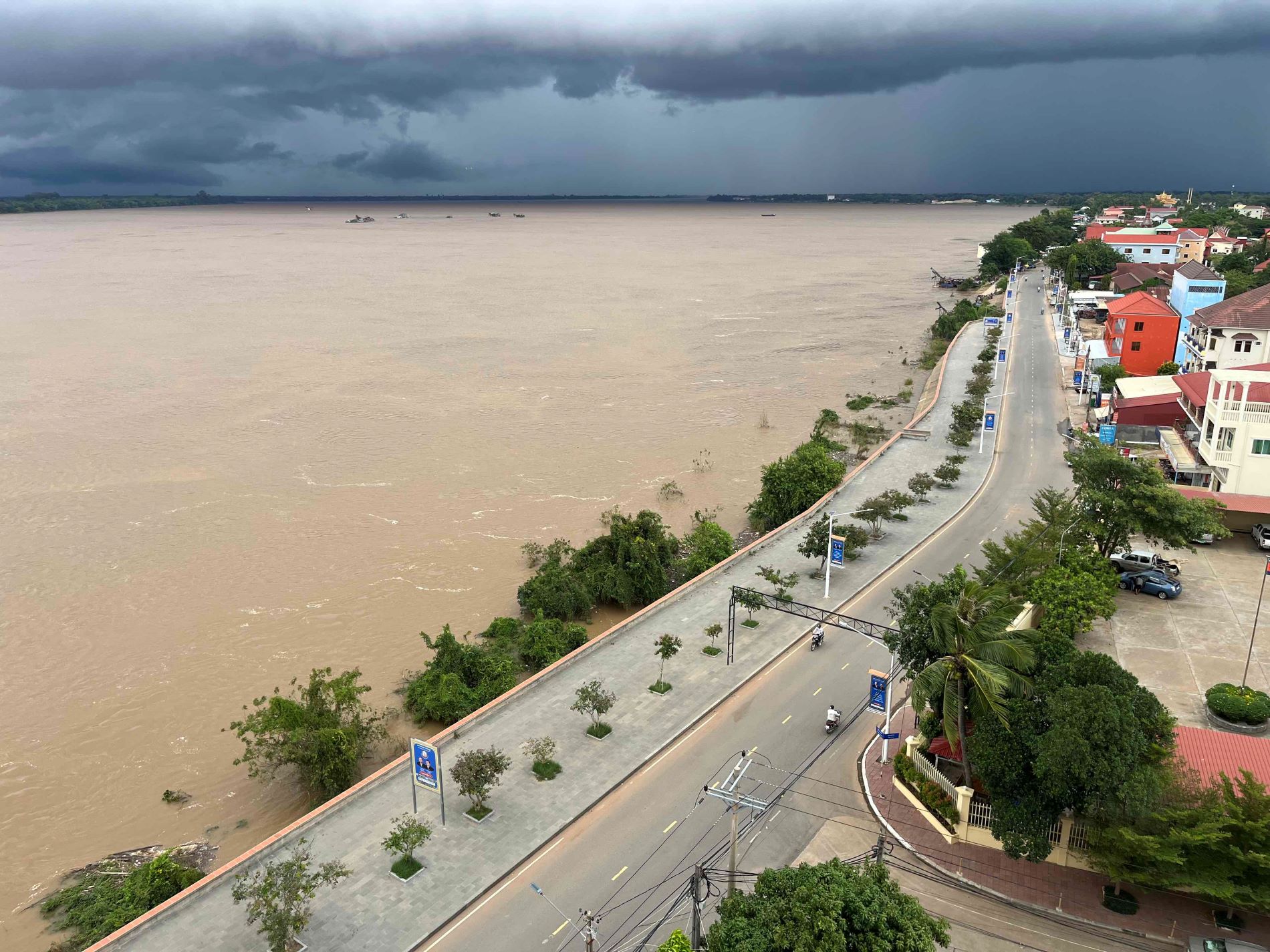
- The city of Kratie on the Mekong River, which is representative of many cities in Cambodia and Laos, is facing the challenge of increased vulnerability to flooding and other climate-related impacts resulting from the conversion of peri-urban wetlands into residential areas.
- Sarihajo/Sleman, located within the greater Yogyakarta area, is experiencing significant changes to its settlement structures due to urbanisation, resulting in increased water stress that cannot be sufficiently mitigated by traditional water governance structures.
- In Sam Neua, Laos, changing land use patterns are making the area highly vulnerable to flooding on a scale comparable to the 2021 flood disaster in the Ahr Valley in Germany.
Based on the diagnostic work, development scenarios were created to contrast the ‘business-as-usual’ approach with options for water-sensitive urban development. Although these strategy recommendations and instruments aim at comprehensive water-sensitive change, they can also be applied specifically to strategy development in relevant areas such as climate adaptation, water security, wastewater disposal and green space planning.
- A development plan for the Krong Kratie urban wetlands has been drawn up in Kratie for the period 2024 to 2035. The provincial government recognises this plan as a strategic element for sustainable urban development and climate adaptation. The implementation phase of the PUW project will support the provincial and municipal governments of Kratie in building the capacity required to implement the plan and integrate it into the national urban policy framework.
- A multi-layered approach to water-sensitive community development has been successfully piloted in Sleman Regency. The PUW implementation phase will replicate this approach in other peri-urban areas, integrating it into the local governance framework and implementing water-sensitive measures. With the support of the German team, the project results will be transferred to other regions of Indonesia to serve as a model for resilient and sustainable urban development.
- In Laos, the provincial government of Houaphan has declared the water-sensitive urban development options identified in the baseline study to be strategic components for the vision of a ‘green, clean and beautiful’ city of Sam Neua. During the implementation phase, PUW will support the Ministry of Public Works and Transport as well as the national urban planning authority (PTI) in using the tools developed in Sam Neua to revise the national urban planning guidelines – thereby creating a highly relevant lever to scale up the project results achieved so far.
Project lead:
Dr. Bernd Gutterer
BORDA e.V.
Am Deich 45
28199 Bremen
Phone: +49 175 2076637
E-Mail: gutterer@borda.org
Last updated on