
From research to implementation for sustainable urban development: Start of the SURE implementation phase
How can urban regions achieve sustainable and climate-resilient development? Over the past four years, ten projects of the SURE funding priority have been conducting joint research in Asia and Germany. Now it is time to implement the results.
By 2050, around 70 percent of the world's population will live in cities. Even today, urban areas consume the majority of energy and resources and cause most greenhouse gas emissions. The consequences of a lack of sustainable planning are particularly evident in rapidly growing urban regions in Southeast and East Asia: overburdened infrastructure, ecological risks and social challenges.
In order to address these developments at an early stage, the Federal Ministry of Research, Technology and Space (BMFTR) has been promoting research projects since 2019 with the SURE initiative (Sustainable Development of Urban Regions). In this initiative, researchers from Germany work together with partners from the project areas to develop and test local solutions for sustainable and resilient cities. The aim is to implement these solutions locally on a permanent basis and to transfer them to other urban regions in the surrounding area and throughout Germany.
Start of the implementation phase in 2025
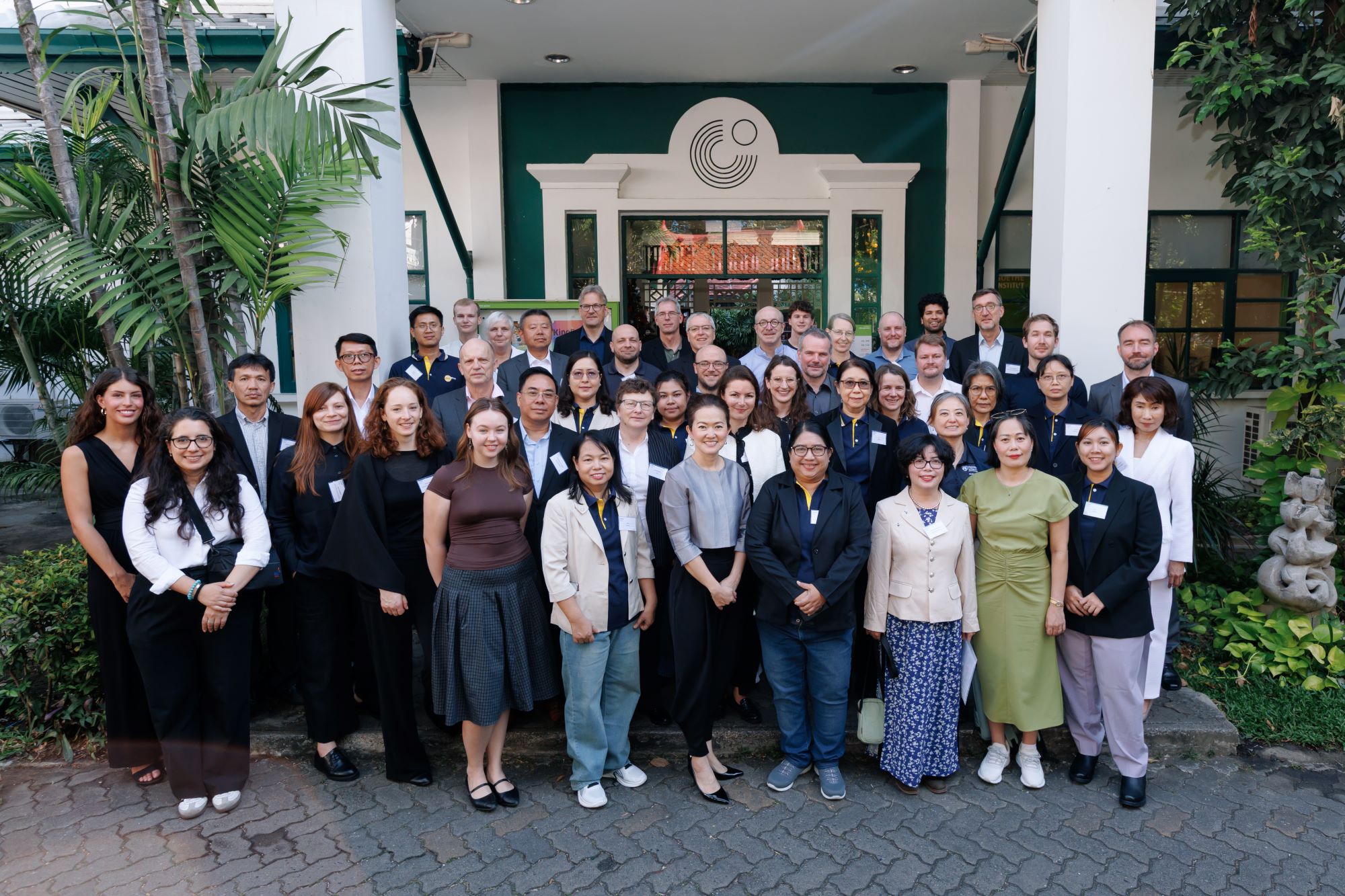
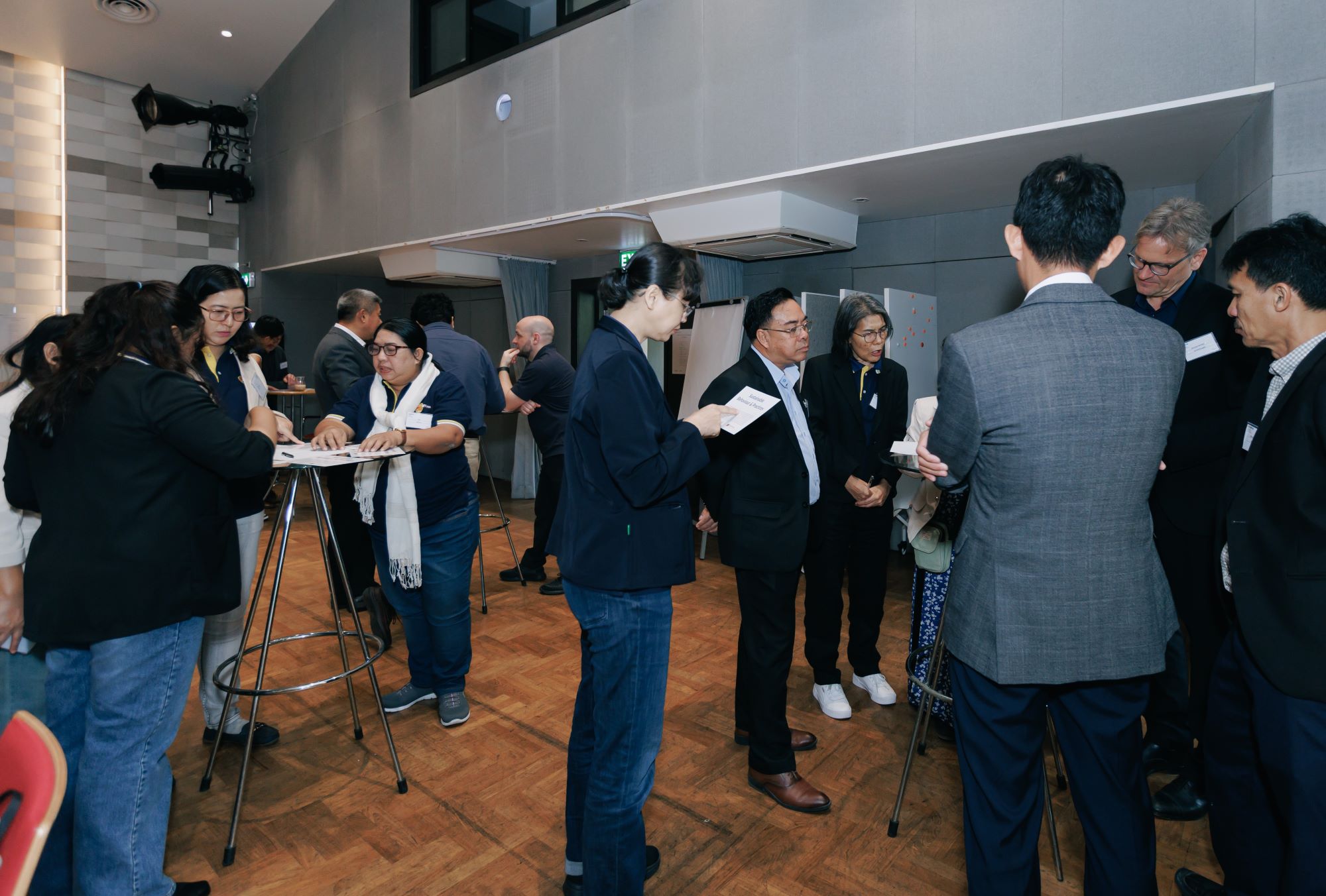
Following a five-year research and development (R&D) phase (2020–2025), the implementation phase for seven successful joint projects from the BMFTR funding measure SURE is now beginning. A kick-off event was held in Bangkok, Thailand, on 16 and 17 December 2025.
The event was opened by Srinivasa Popuri, Head of the Multi-Country Programme Office of the UN-Habitat Regional Office for Asia and the Pacific in Bangkok. “Risk-informed land-use planning is one of the most effective tools for disaster risk reduction,” said Popuri. Instead of merely responding to disasters that cause high costs, he said, it is now necessary to invest in preventive measures. In her keynote speech, Thai landscape architect Kotchakorn Voraakhom emphasised the importance of using nature-based solutions to make cities more climate-resilient: “We must regreen the cities to tackle climate change.” Both emphasised the importance of tailoring global and national climate adaptation strategies for cities to local conditions (see the box below for more information). They also welcomed the contributions made by the SURE projects in this regard.
During the conference, around 50 participants discussed innovative implementation tools, best practices and new challenges facing the projects and the entire SURE project network in interactive formats. Joint working processes were also established and the next steps defined to ensure SURE's continued commitment and progress.
Examples of results from SURE projects
The thematic focus of the SURE projects ranges from water management (PolyUrbanWaters) to urban planning (IMECOGIP) and flood risk management (FloodAdapt, MYrisk).
For example, the aim of the GreenCityLabHuế project is to strengthen the climate resilience of the city of Huế in central Vietnam by planning and implementing nature-based solutions (NBS) and green-blue infrastructure (GBI). These include green spaces, parks, urban trees and water bodies – natural elements that are crucial for cooling, air quality and recreation. Based on the initial project phases, the ‘Green City Vision Huế’ was developed, a strategy for a greener, more resilient city, accompanied by a best practice handbook. In addition, three public spaces – a school playground, a cultural centre and a brownfield site – were redesigned in an exemplary manner to adapt to climate change in collaboration with local stakeholders.
During the current implementation phase (2025–2027), the NBS project is working with local stakeholders to implement measures at two additional public locations. These measures are designed to reduce heat, improve air quality and establish new recreational spaces. The implementation is also being scientifically monitored in order to evaluate the effectiveness and benefits of the participatory approach. The results will then be published to strengthen knowledge transfer in municipal planning processes in Vietnam and beyond in other cities.
During the research and development (R&D) phase, the CHARMS project focused on historic wooden houses in Thai cities with a hot and humid climate. The aim was to develop sustainable, adapted usage concepts that improve interior comfort while preserving the architectural heritage and cultural identity of these cities.
This has already been achieved to some extent in the R&D phase, in which a test house was insulated using the bio-based building material Typha. In the implementation phase, the follow-up project CHARMSbio will expand the scope of application and support King Mongkut's Institute of Technology Ladkrabang (KMITL) in Bangkok in establishing a competence centre for sustainable, bio-based urban development. This is because nature-based materials such as Typha not only improve the energy efficiency of historic buildings, but also sequester carbon, thereby helping to reduce the urban carbon footprint. It is expected that this building material will measurably increase the energy efficiency of houses, neighbourhoods and cities in Southeast Asia.
Synthesis of project results
In addition to the collaborative projects, SURE also funds the SURE Facilitation and Synthesis Research project (SURE F&SR), which provides both scientific and organisational support. It coordinates exchanges between the individual projects, promotes synergies and compiles the results to create a shared knowledge base.
The highlights of the research results from the R&D phase were published by the SURE F&SR project in the brochure ‘SURE Highlights — Shaping Sustainable Urban Regions’. The brochure also highlights the impact of the results and future initiatives of the projects.
Furthermore, the SURE Atlas was created. This online tool is an interactive knowledge database designed to present knowledge generated by SURE projects in a structured manner, and above all to promote and showcase collaborative processes within the projects and their environment. It serves as an important source of information for researchers, practitioners, policymakers and the general public. By presenting the most important data and findings from all SURE collaborative projects, progress can be tracked more easily and the impact of SURE's collaborative initiatives is demonstrated more clearly.
The BMFTR is supporting the current two-year implementation phase of SURE with funding of around ten million euros.
WUF12 Perspectives
The discussions were based on the WUF12 Perspectives developed at the last World Urban Forum 2024 (WUF12). According to these, sustainable urban development can only succeed if local conditions are taken into account, the needs of local stakeholders and the population are given significant consideration, and global insights are transferred into locally implementable, realistic strategies.