


IIASA – International Institute for Applied Systems Analysis
How are global systems such as the climate, energy and the economy interconnected? Over 600 scientists from around 60 countries are conducting joint interdisciplinary research on this topic through various programmes and projects at IIASA.
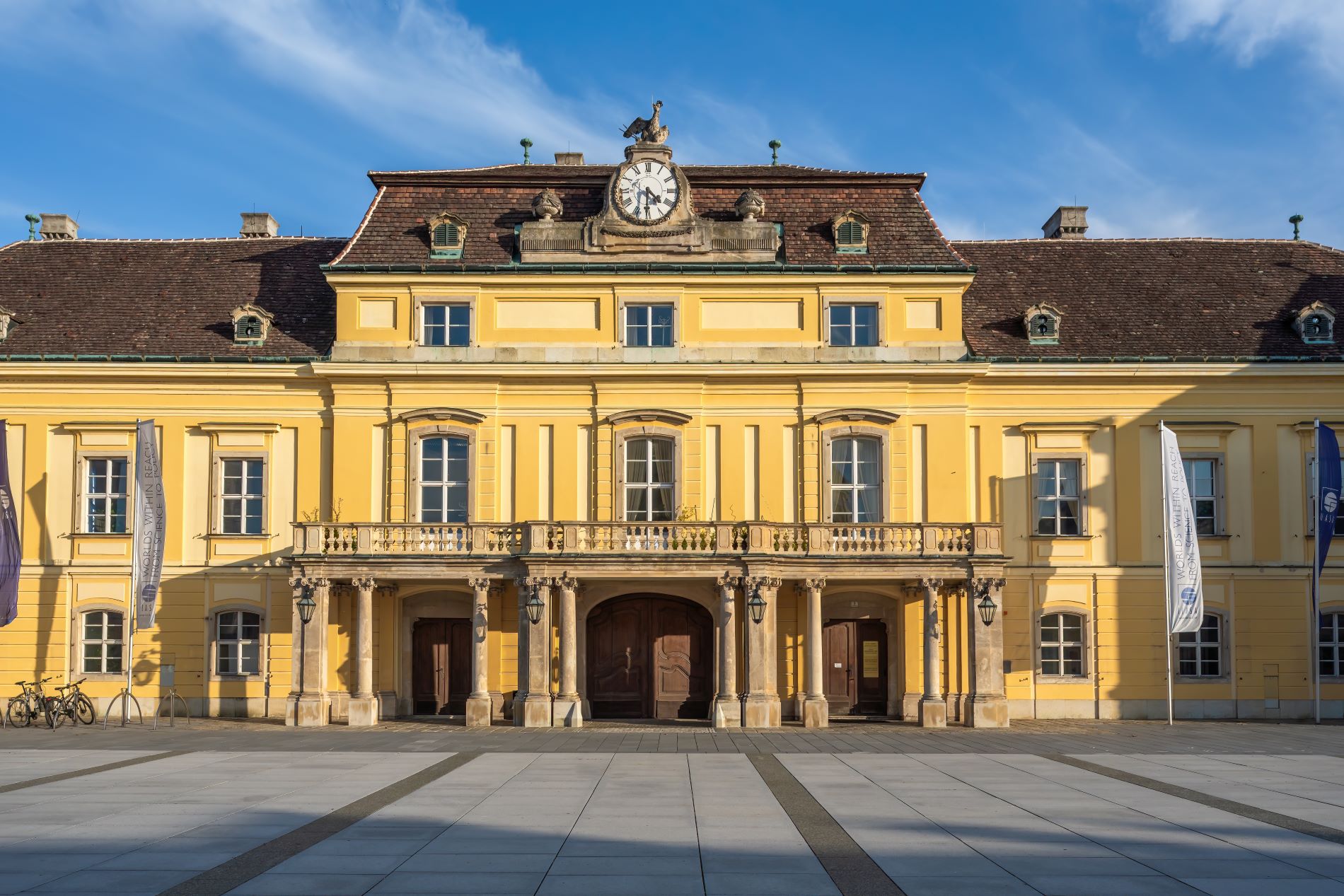
The independent International Institute for Applied Systems Analysis (IIASA) deals with a wide range of global issues and problems, from climate change and energy security to finance. To better understand the interrelationships between these complex topics and find solutions, more than 600 researchers collaborate on a project-by-project basis across national borders. They are funded by various organisations, including the Federal Ministry of Research, Technology and Space (BMFTR). Further information on the structure and funding of IIASA can be found in the info box below. IIASA's research aims to develop implementable strategies and concrete courses of action for politics and society. For instance, IIASA researchers' results and expertise are made available to political decision-makers worldwide to inform national and international climate protection measures. These resources are intended to support politicians in making informed, evidence-based decisions.
IIASA research topics
IIASA's research is based on the IIASA Research Strategy for 2021–2030, which focuses on key issues related to the United Nations' Sustainable Development Goals (SDGs). The focus is on systematically investigating the dynamics of global ecological, economic, technological, and social change. IIASA's research topics, based on this strategy, cover the following areas:
- Energy, climate and environment
- Biodiversity and natural resources
- Society and demography
- Sustainable economic development
- Strategic initiatives, including the transition to sustainability
- Applied systems research, such as modelling natural systems (e.g. the extent of climate change and other human-induced changes to ecosystems), risk research, and governance.
IIASA provides scientific basis for international climate policy
Thanks to its broad international and interdisciplinary network, IIASA is able to provide scientists, political decision-makers and society with up-to-date and relevant information on global changes in nature, the economy and society. For example, IIASA contributes to the work of the Intergovernmental Panel on Climate Change (IPCC). The IPCC has repeatedly referenced IIASA studies to emphasise particular aspects of climate change, such as the impact of current climate policies on future generations and intergenerational justice. The IPCC's statements have also incorporated scenarios on the costs of climate change and how biodiversity, climate and water supply targets can be achieved through integrated strategies, most recently in the Sixth IPCC Assessment Report.
IIASA takes on responsibility in the areas of science diplomacy, capacity building and international networking
IIASA is currently intensifying its efforts in the field of science diplomacy. Its membership of numerous intergovernmental organisations allows it to utilise its function as a ‘bridge builder’ to its fullest potential, for example by acting as a knowledge broker on cross-border research issues. To further strengthen these activities, IIASA established the Raiffa Centre for Science Diplomacy in 2024.
IIASA also offers a wide range of opportunities for young scientists, including a summer programme (YSSP), postdoctoral fellowships, networking opportunities and alumni support.
Establishment and funding of IIASA
IIASA is funded by a consortium of currently 19 national member organisations from Europe, North America, Africa and Asia, as well as a regional member organisation from sub-Saharan Africa, which is supported by a further 18 countries from this region. IIASA's annual budget in 2024 was approximately 32 million euros, of which around 40 percent is covered by member contributions from the countries. The remainder comes mainly from third-party funding. Since 2023, German climate researcher Prof. Hans Joachim Schellnhuber has been Director General of IIASA.
Germany has supported the international institute since its foundation in 1972. The BMFTR currently provides the IIASA with a total of around 743,000 euros annually. Germany also contributes around 28,000 euros per year to the IIASA Summer School. Each year, five young German scientists are sent to the IIASA for three-month research stays. Between 2020 and 2024, German scientific institutions have collaborated on approximately 550 IIASA publications. The German Association for the Advancement of IIASA, based at the Potsdam Institute for Climate Impact Research (PIK), ensures that IIASA is well connected within the German scientific community and with the BMFTR.
News about the measure
Last updated on